Red Dot, Racing Heart: The Tiny Icons Engineered to Keep You on Edge
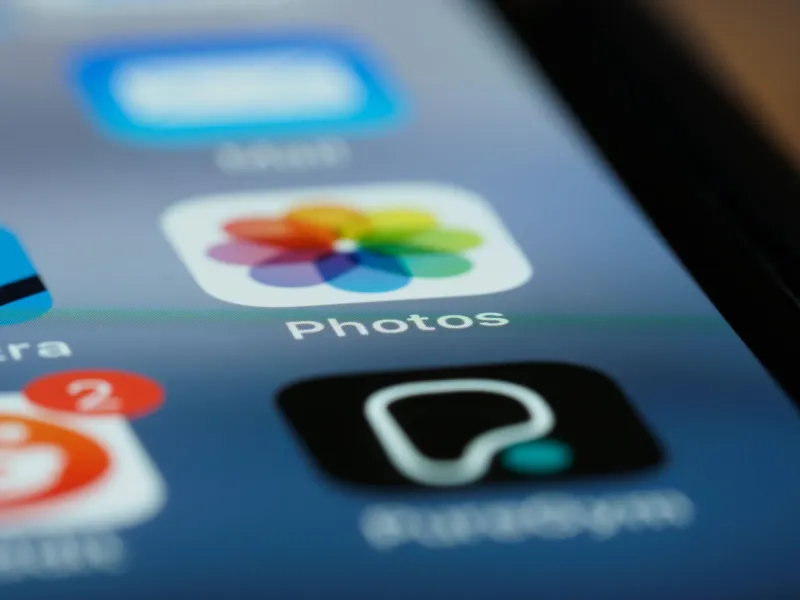
There's a specific kind of dread that doesn't announce itself. It doesn't arrive like a panic attack or a bad phone call. It just sits there — quiet, persistent, a little fluorescent — in the corner of an app icon. A red circle. A white number inside it. Maybe a two, maybe a forty-seven. You didn't ask for it. You don't even know what it means yet. But your body already responded before your brain caught up.
That's not anxiety you brought to your phone. That's anxiety your phone manufactured for you, on purpose, with intention, using decades of behavioral psychology research. And we've all just been living inside this experiment, sipping our coffee, pretending it's fine.
The Badge Is Not Neutral
Let's be real about what a notification badge actually is: it's a demand dressed up as information. The red dot on your email app isn't telling you something important happened. It's telling you that something happened, and that you haven't dealt with it yet, and that this unresolved state is somehow your fault.
That feeling — the itch of incompletion — is not accidental. Designers and product teams have known for years that unfinished tasks create psychological tension. It's called the Zeigarnik effect, named after a Soviet psychologist who noticed that waiters remembered unpaid tabs better than settled ones. Our brains fixate on the open loop. Tech companies didn't discover this and think, "huh, interesting." They built entire notification systems around it.
The badge is the open loop. You are the waiter. The tab never fully closes.
Urgency Is a Feature, Not a Bug
Push notifications evolved fast. Early smartphone alerts were genuinely useful — a calendar reminder, a text from someone you actually knew. But somewhere around the mid-2010s, apps figured out that if they could get you to enable notifications, they had a direct line to your attention at any moment of the day. The economics of that are impossible to resist when your business model runs on engagement.
So the notifications multiplied. And they got smarter. They started using language calibrated to trigger social anxiety: "Sarah and 14 others reacted to your post." "You haven't checked in with your friends lately." "Don't lose your streak!" These aren't updates. They're tiny emotional levers, pulled by algorithms that have been A/B tested until they produce the maximum compulsive response.
Duolingo's guilt-tripping owl became a meme for a reason. But the owl is just the honest version of what every notification is doing. Most apps just do it with less personality and more plausible deniability.
The Ambient Hum Nobody Talks About
Here's what I think we don't talk about enough: you don't have to look at your phone for the notifications to be working on you. The anxiety is ambient. It operates in the background of your day like a sound you've stopped consciously hearing but that still raises your cortisol.
You know your phone is there. You know there are probably things on it. Unanswered messages. Unread emails. Some number of little red dots accumulating like interest on a debt you forgot you had. That background awareness — the low-level vigilance of a person who might be needed at any moment — is exhausting in a way that's hard to quantify because it never fully peaks. It just hums.
Some researchers have started calling this "technoference" — the way devices interrupt not just our time but our psychological baseline, even when we're not actively using them. The phone doesn't have to buzz. The possibility that it could is enough to keep part of your brain on standby.
Wanted, or Just Monitored?
There's something almost seductive about notifications, and I think that's worth sitting with honestly. When your phone lights up, there's a flicker — just for a second — of feeling like someone thought of you. Like you matter. Like you're connected to something larger than the room you're sitting in.
That flicker is real. The feeling isn't entirely manufactured. Humans are social animals and we're wired to respond to signals of attention from others. The problem is that apps have learned to mimic those signals without the actual social substance behind them. A notification that "someone liked your photo" is designed to feel like a moment of human recognition. But it's not a phone call. It's not a letter. It's a data point that served the platform's engagement metric and got routed to your dopamine system as a side effect.
You're not wanted. You're retained. There's a difference, and the business model depends on you not noticing it.
What It Actually Costs
The mental health research here is not subtle. Studies consistently link high notification volume with increased stress, reduced ability to concentrate, and worse sleep — particularly when people keep their phones nearby at night, which most Americans do. The constant context-switching demanded by notifications fragments attention in ways that don't fully repair between interruptions. You lose the thread of what you were doing. You lose the thread of what you were thinking.
And there's a subtler cost that's harder to measure: the slow erosion of your own sense of what's urgent. When everything pings, nothing means anything. You start to lose the ability to distinguish between a genuine crisis and a Venmo request. Your nervous system, which was designed to triage threats, gets stuck in a low-grade alert state because the signals never stop coming and none of them are real emergencies.
This is not a personal failing. This is the intended outcome of a system optimized for your attention, not your wellbeing.
Turning It Off Is a Radical Act
I'm not going to tell you to throw your phone in the river. That's not realistic and also the river doesn't deserve it. But there's something genuinely countercultural about going into your settings and gutting your notification permissions — app by app, toggle by toggle, letting the red dots starve.
It feels uncomfortable at first. That's the point. The discomfort is withdrawal from a system that trained you to need it. Give it a week. The ambient hum starts to quiet. The baseline panic drops a few notches. You start to notice what your attention actually wants to do when it isn't constantly being redirected.
The devices learned to make you feel wanted because feeling wanted keeps you opening apps. But you were never the customer. You were always the product — delivered, refreshed, and re-served to advertisers every time you chased another little red dot into the feed.
Turn off the badges. Let the number disappear. Nothing that actually matters will go unaddressed. And the rest of it — the manufactured urgency, the engineered obligation — was never yours to carry in the first place.