Your Phone Thinks It Loves You (It Doesn't)
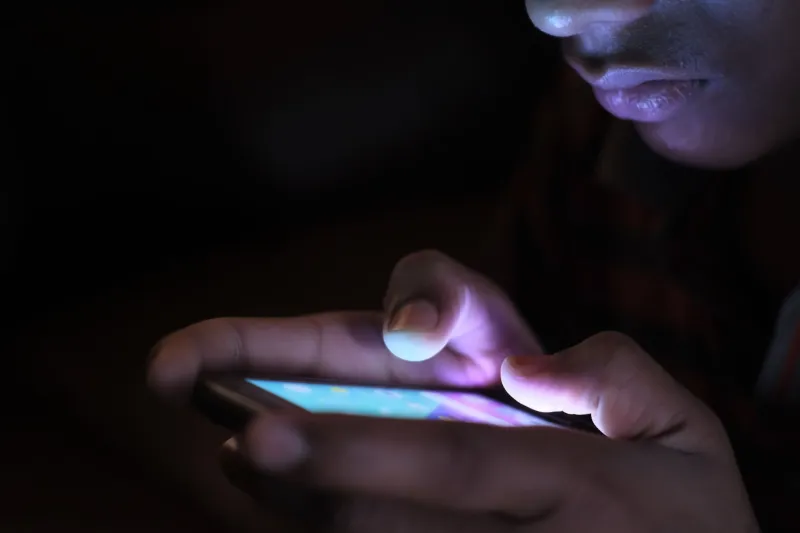
There's a particular flavor of warmth you get when your phone buzzes at exactly the right moment. You've been thinking about that show, and suddenly there it is — a push notification, a new episode drop, a "we thought you'd like this" that lands with the precision of a friend who actually listens. It feels good. It feels personal. That's the whole point. That's also the trap.
We are living inside the most sophisticated flattery machine ever built, and we keep mistaking its output for intimacy.
The Ping That Knows Your Name
Personalization technology didn't start out trying to simulate love. It started out trying to sell you stuff. But somewhere between the targeted ad and the "your weekly recap" email, something shifted. The algorithms got better at mimicking the texture of being known — the small, specific gestures that, in human relationships, signal that someone has been paying attention to you.
Your music app doesn't just shuffle. It builds you a playlist that opens with the exact tempo you need on a Monday morning. Your news app learns that you scroll past anything about Congress but slow down for local restaurant openings. Your shopping app notices the gap between your browsing and your buying and nudges you right at the moment your resistance is lowest. None of this is coincidence. None of it is care. It's pattern recognition dressed up in the language of intimacy, and we are eating it up.
The psychology here isn't complicated, even if the engineering underneath it is. Humans are wired to feel good when we feel seen. Recognition is a fundamental social reward. When something — or someone — reflects our preferences back at us with accuracy, our brain registers it as connection. The algorithm knows this. The algorithm was built to exploit this. Every "because you liked" and "we noticed you've been into" is a tiny hit of synthetic recognition, and we've been dosing ourselves all day without realizing it.
A Data Point That Feels Like a Protagonist
Here's the uncomfortable part: you are not the main character of your app's story. You are a cluster of behavioral signals inside a model that is optimizing for engagement, retention, and conversion. The notifications aren't designed to make you happy. They're designed to make you return. Those are related outcomes, but they are not the same thing, and the gap between them is where a lot of modern loneliness quietly lives.
There's a specific kind of disorientation that hits when you realize your phone knows more about your emotional patterns than your closest friends do. Your streaming service knows you spiral into true crime documentaries when you're anxious. Your food delivery app knows you order comfort food on Sunday nights. Your social media feed knows which kind of post makes you stop scrolling and which kind makes you close the app entirely. Meanwhile, your best friend from college just texted to ask how you're doing and you typed "good" in under three seconds.
The algorithm has more data. Your friend has more capacity for meaning. We keep confusing the two.
When Personalization Gets Existential
There's a term in tech circles — "the illusion of the personal" — that describes how mass-produced content gets filtered and repackaged to feel individualized. It's a design principle. It's also, if you sit with it for a second, kind of a horror show.
Every notification that feels like it was sent just for you was also sent, in some variation, to millions of other people who share your behavioral profile. You are not unique to the machine. You are a segment. You are a cohort. You are "users aged 28–34 who engage with wellness content on weekday mornings and abandon carts on Friday evenings." The ping that felt like a whisper was actually a broadcast.
And yet. We keep opening the app. We keep scrolling to the bottom of the recommendation queue. We keep letting the autoplay run because stopping it requires an active choice and the algorithm has made passive consumption feel like the path of least resistance. This is by design. The attention economy doesn't want you to feel lonely — loneliness makes you put the phone down. It wants you to feel almost connected. Almost seen. Just satisfied enough to keep going but just empty enough to keep looking.
The Friends Who Don't Have Your Data
Here's a small, uncomfortable exercise: think about the last time a real person in your life surprised you with something specific. Not a birthday post on your wall, not a meme they tagged you in because the algorithm showed it to them too — something genuinely personal. Something that required them to remember a detail, to make a connection, to think about you when you weren't in front of them.
For a lot of us, that kind of moment is rarer than we'd like to admit. And part of why it's rare is that we've outsourced so much of our "feeling known" to devices that are very good at simulating it. The bar for human connection has to compete with an industry that employs thousands of engineers specifically to make you feel attended to. That's not a fair fight.
This isn't a screed against technology or a call to delete your apps and move to a cabin. It's more of a check-in. A pause. A moment to ask yourself: when's the last time you felt genuinely seen by a person, not a platform?
Spilling It Straight
The notification is not your friend. The recommendation engine is not your therapist. The algorithm that curates your morning news, your evening soundtrack, and the memes that make you feel understood is not, at its core, interested in your wellbeing. It is interested in your attention, and your attention is the product being sold.
None of this means the moments of resonance you feel aren't real. Feeling understood — even by a machine — still activates real neurological responses. The warmth is genuine, even if the source isn't. But warmth that comes from a system designed to extract your engagement is a different thing than warmth that comes from a person who chose to pay attention to you.
One of them scales infinitely. One of them is irreplaceable.
Your phone will never love you. But it has gotten very, very good at making you forget to notice.