Crying for Clicks: The Dark Business of Selling Your Breakdown Online
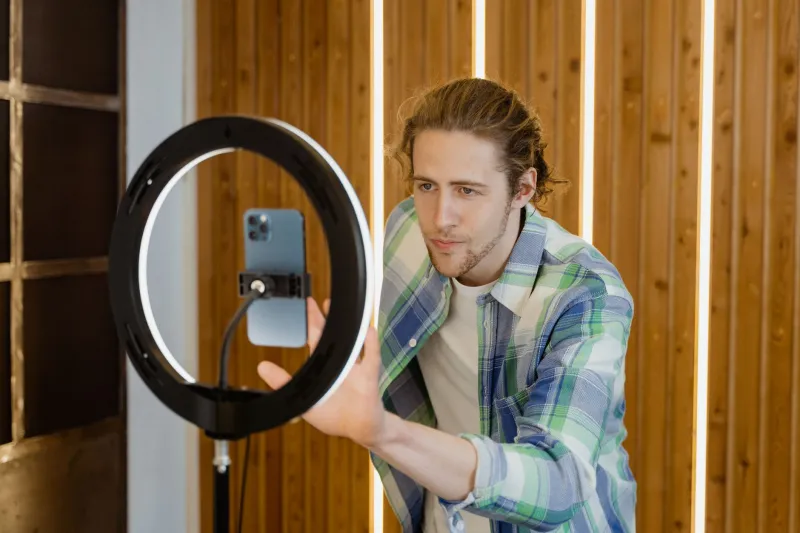
There's a specific kind of TikTok video you've definitely seen. The creator sits in their car — always the car, never the kitchen, always the car — face slightly blotchy, ring light catching the gloss of a fresh cry. The caption says something like "I wasn't going to post this but you deserved to know." By the time you've watched it twice, it's at 2.3 million views and the comments are a waterfall of heart emojis and "you're so brave for sharing this."
And maybe they are. Maybe it's real. That's the whole problem.
The Emotion Algorithm Is Very Much Real
Here's what we know about how short-form content gets distributed: emotional intensity drives engagement, and engagement drives reach. Platforms don't explicitly reward crying — but they do reward watch time, shares, and saves, and content that makes people feel something captures all three. Creators figured this out not through some cynical mastermind session but through basic pattern recognition. Post a dance, get decent numbers. Post a therapy-speak confessional about your attachment style, and suddenly you're being stitched by forty other creators and your follower count jumps overnight.
The incentive structure practically writes the content for you.
What's emerged is something that functions like an industrial complex — a repeatable content format built around emotional disclosure. Struggle with anxiety? There's a proven arc for that. Survived a toxic relationship? Three-part series, minimum. Diagnosed with something? The "I finally have answers" reveal is practically its own genre at this point. None of this means the feelings aren't real. It just means the presentation of those feelings has been optimized, and optimization changes things in ways that are hard to name but easy to feel.
The Aestheticization of Pain
One of the more unsettling developments in this space is how polished the rawness has become. The car cry video isn't just emotionally resonant — it's visually resonant. Warm lighting. A deliberate pause before speaking. The strategic wipe of a single tear rather than the ugly, snot-forward reality of actually falling apart. It looks like vulnerability the way a Glossier ad looks like a bare face: technically minimalist, actually very constructed.
That construction isn't inherently dishonest. Humans have always performed grief and shaped their pain into shareable narratives — it's how we make meaning. But when the performance is calibrated to an algorithm's emotional preferences, something shifts. The story stops being told for the person living it and starts being told for the platform's distribution mechanics. The audience becomes a metric rather than a community. And the creator, consciously or not, starts editing their experience to fit the format that gets rewarded.
The result is a kind of aestheticized suffering — pain that's been processed through the same filters as a beach vacation or a morning routine video. It looks like honesty. It's packaged like a product.
Who's Actually Getting Helped Here
Defenders of this content — and there are plenty, including plenty of mental health professionals who've built their own platforms on it — argue that visibility normalizes struggle. Seeing someone talk about their panic attacks makes viewers feel less alone with theirs. That's not nothing. Destigmatization is real work, and a lot of it has happened in comment sections.
But there's a difference between visibility and commodification. When a creator's trauma disclosure comes with a link to their Patreon, a promo code for a therapy app, and a merch drop that says "healing era" on the front, the calculus gets complicated. The vulnerability that was supposed to connect people is also funding a content business. The audience's emotional investment is the product being sold back to the sponsors.
This isn't unique to mental health content — parasocial monetization runs through every corner of creator culture. But it hits differently when the content is explicitly about pain. There's an implicit contract in a sob story: I'm trusting you with something real. When that contract is also a revenue strategy, the trust starts to feel like a lever being pulled.
The Viewer's Side of the Transaction
Audiences aren't passive in this. Part of what makes the vulnerability economy function is how much people want to be moved. There's genuine hunger for emotional content in a media landscape that otherwise serves up irony and detachment as the default mode. When someone cries in their car and says the thing you've been afraid to say out loud, the relief is real even if the performance is constructed.
But consuming emotional content as entertainment has side effects. It trains you to experience other people's pain as something that happens to you — something you watch, respond to, and move on from in the thirty seconds before the next video loads. Empathy, practiced this way, becomes a kind of spectatorship. You feel it, you comment "sending love," and you scroll. The creator gets their engagement. You get your emotional hit. Nobody actually had to sit with anything.
There's also the comparison trap. When vulnerability is aestheticized and rewarded, it creates an implicit standard for how struggle is supposed to look. The people whose pain is messier, quieter, less telegenic — the ones who can't articulate their trauma in a sixty-second arc with a satisfying ending — don't go viral. Their suffering doesn't trend. The sob story industrial complex, like every other content vertical, has a beauty standard.
Asking the Uncomfortable Question
None of this is an argument for emotional stoicism online. People should be able to talk about what they're going through, and the internet can be a genuinely connective space for that. The question isn't whether vulnerability belongs on social media. The question is what happens to it once it gets there.
When authenticity becomes a content strategy, it doesn't disappear — but it does change shape. It gets trimmed to fit a format, lit to feel intimate, posted at the hour when engagement peaks. The original feeling might have been completely real. The version you watched in your FYP has been through a production pipeline.
Maybe the most honest thing a creator can do right now is acknowledge that tension rather than paper over it with another caption about being "unfiltered." And maybe the most honest thing a viewer can do is ask, somewhere between the first watch and the second, whether they're witnessing something or consuming it.
Because there's a version of this where everyone profits — the creator, the platform, the sponsor — except the actual emotional truth of the thing, which got left in the car.