Possession Is Nine-Tenths of the Breakroom: The Unspoken Politics of the Stolen Office Mug
Let's be honest about something. There is a mug in your life — maybe on your desk right now, maybe packed into a moving box from your last job, maybe sitting in your kitchen cabinet next to the things you actually chose — that you did not pay for, were not gifted, and have never once felt guilty about keeping. It came from a breakroom. It was technically communal property. And the moment you decided it was yours, something quietly shifted.
You didn't steal it, exactly. That's what you tell yourself. You claimed it.
There's a difference, right?
The Communal Kitchen as a Lawless Frontier
Every office breakroom operates under a social contract that nobody signed and nobody fully respects. There are the unspoken rules — don't microwave fish, label your leftovers, replace the coffee when you finish it — and then there are the written ones, usually a passive-aggressive printed note taped above the sink, font size 14, Comic Sans if the office is really chaotic. Neither set of rules says anything useful about the mugs.
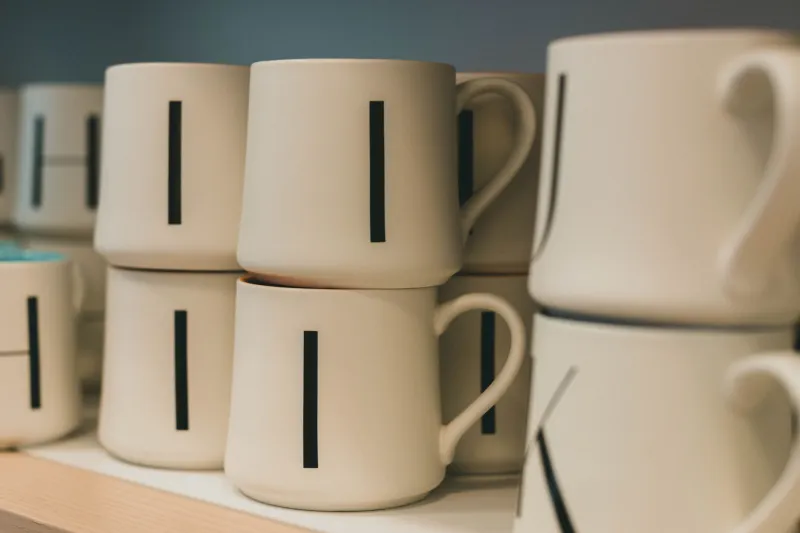
The mugs just accumulate. They arrive from conference swag bags, forgotten lunches, company anniversaries, and the estates of people who left three years ago and never came back for their stuff. They pile up in a cabinet that smells faintly of old dish soap, and they belong, technically, to everyone, which in practice means they belong to no one.
When something belongs to no one, the psychological door swings wide open.
Psychologists call it the endowment effect — the moment you touch something, hold it, use it, your brain starts calculating its value upward. You didn't just pour coffee into that mug. You chose it. Maybe it was the only one that wasn't chipped. Maybe it had a handle that fit your grip. Maybe it was just there when you needed something, and you needed something badly enough that you made a quiet decision. That decision compounded, day after day, until the mug stopped being the office's and started being yours.
What the Mug Is Actually Doing
Here's the thing about working in a shared space: you give up a lot. You give up silence. You give up temperature control. You give up the ability to decorate more than a two-foot radius around your chair without somebody calling it a fire hazard. The modern American office, whether it's a fluorescent-lit cube farm or a self-consciously designed open floor plan with exposed ductwork and a ping-pong table nobody uses, is fundamentally a place where your personhood gets negotiated down to an acceptable minimum.
The mug is a reclamation project.
It's small, sure. It's ceramic and probably has a logo for a software company you've never heard of or a marathon someone ran in 2016. But it is yours now, and that mattering — that small, specific, stubborn mattering — is doing real work inside your psyche. It marks territory in a place where you're not really allowed to have territory. It says: I was here. I am here. This corner of the shelf is mine.
Antropologists have spent decades studying how humans use objects to communicate status, belonging, and resistance. You don't have to be living in a village in the 1400s for this to apply. The breakroom is its own micro-society, and the mug you claimed without asking is a quiet political act dressed up as convenience.
The Corporate Relationship and Its Hidden Resentments
Let's not romanticize it too much, though. Part of why taking the mug feels so natural — why the guilt simply doesn't show up — has to do with the particular texture of what most Americans feel about their employers. The relationship between a worker and a company is already one of perpetual imbalance. You give time, energy, creativity, and loyalty. You get a salary that hasn't kept pace with rent, a health plan with a deductible that makes you reconsider going to the doctor, and the occasional free lunch that comes with a mandatory team-building component.
In that context, a mug isn't theft. It's a rounding error on the scale of what's owed.
This isn't cynicism. It's math. And somewhere in your subconscious, you've already done it. The mug represents a tiny, manageable act of taking something back — not dramatic enough to get you fired, not significant enough to cause real harm, but just enough to feel like you're not entirely powerless inside a system that's pretty good at making you feel exactly that.
There's a reason the breakroom mug grab doesn't come with the adrenaline of actual wrongdoing. Your nervous system knows the difference between transgression and correction.
When the Mug Leaves With You
The really revealing moment isn't the first time you use the mug. It's the day you leave the job.
Some people put it back. They set it in the cabinet on their last day, a small symbolic gesture, a clean break. Most people don't. Most people wrap it in a hoodie, tuck it into their bag, and carry it out through the lobby without breaking stride. And here's what's interesting: they don't feel worse about it on the way out than they did on the way in. If anything, they feel vindicated.
Because by then, the mug has a history. It's absorbed years of bad meetings and good conversations and 7 a.m. mornings and the specific exhaustion of a job that asked a lot and gave back just enough to keep you there. It's been through things. You've been through things together, you and this accidental cup, and whatever claim the office thought it had has been quietly dissolved by time and daily use.
You earned it. That's the story. And stories, once they've settled into something, are very hard to dislodge.
The Cup Knows What It Is
There's something Cup Zine-appropriate about all of this — the idea that a vessel, something designed to hold something else, ends up holding more than anyone planned. The breakroom mug isn't just a breakroom mug. It's a small autobiography. It's evidence of the deals you made with yourself inside places that didn't entirely deserve you.
So no, you don't feel bad about it. And you probably shouldn't. The mug sits on your desk or in your cabinet, slightly mismatched with everything else you own, and that's exactly right. It was never supposed to fit perfectly. It was supposed to be taken — quietly, practically, without ceremony — by someone who needed to own something in a place that didn't offer much to own.
That someone was you. The mug is yours now.
Act like it.