Buzz, Flash, Panic: The Invisible Engineers Who Trained You to Drop Everything
Let's start with a number: the average American checks their phone 96 times a day. That's once every ten minutes, roughly, assuming you sleep. And before you congratulate yourself for being better than that — you're probably not. Neither am I. Neither is basically anyone who owns a smartphone in 2024, because the system was never designed to leave room for restraint.
What's wild isn't the number. It's that almost none of those 96 checks are genuinely urgent. Someone liked your photo. A food delivery app wants you to know there are deals nearby. A game you haven't opened in three weeks is apparently "missing you." And yet your hand moved toward your pocket anyway, almost before you registered the buzz. That's not a habit. That's engineering.
The Red Badge Is Not Your Friend
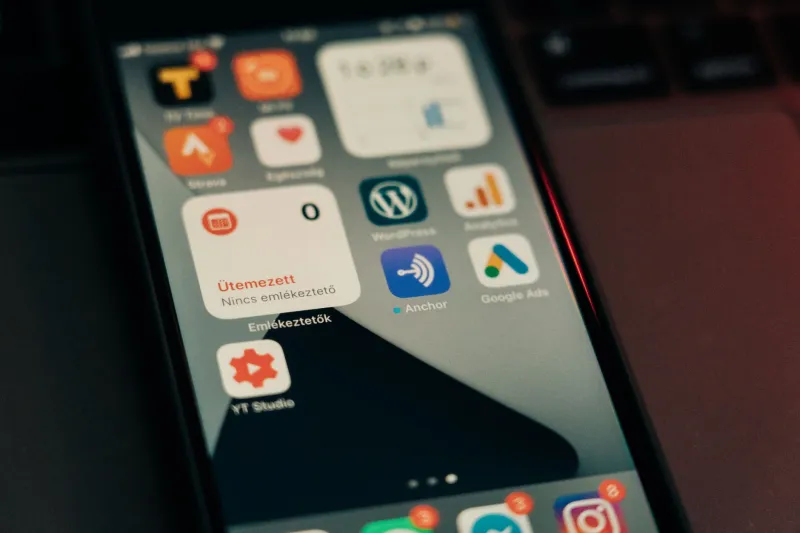
There's a reason notification badges are red. Not blue. Not green. Red — the color of blood, fire, stop signs, and emergency alerts. Designers know this. They've known it for decades. The choice to slap a crimson circle with a number on your app icon is not a neutral aesthetic decision. It is a deliberate trigger pulled straight from behavioral psychology, specifically from research on how humans respond to perceived threats.
When you see red, your nervous system interprets it as a signal that something requires immediate attention. Your cortisol ticks up slightly. Your focus narrows. You feel a low-grade urgency that sits somewhere between mild anxiety and the need to act. The notification doesn't need to be important. It just needs to look important. And red, reliably, looks important.
This is sometimes called "threat salience" in UX circles, though most designers won't use that phrase in a press release. The badge number amplifies it further — because now you're not just seeing a warning color, you're seeing a quantity. Three unread messages. Seventeen updates. The brain reads accumulation as backlog, and backlog as failure. You are behind. You need to catch up. The app is waiting.
Sound as a Leash
If color is the visual hook, sound is the physical jerk on the chain. Notification tones are short by design — usually under two seconds — because brevity prevents you from consciously processing whether you want to respond. The sound fires, your attention shifts, and the decision to check is already made before your prefrontal cortex has a chance to weigh in.
Apple and Google both publish guidelines for notification audio that include recommendations about frequency range and attack time — the speed at which a sound reaches peak volume. Faster attacks feel more urgent. Higher frequencies cut through ambient noise more effectively. This isn't incidental. Every default ping and chime shipped on a major platform has been tested against real human response data.
And then there's the phantom buzz — that sensation of your phone vibrating when it hasn't. Studies suggest somewhere between 68 and 89 percent of smartphone users experience this regularly. Your nervous system has become so conditioned to the vibration pattern that it starts generating the sensation on its own, unprompted, like a body that's been trained to flinch. At that point, the app doesn't even need to send a notification. The anxiety it created is self-sustaining.
False Emergencies, Real Costs
Here's the thing about urgency: it's a finite resource. When everything feels pressing, nothing actually is — but your stress response doesn't know the difference. It treats "someone commented on your post" with the same low-level alarm it reserves for "there's a strange noise in the house at 2 a.m." Over time, that chronic low-grade activation adds up.
Researchers at the University of California, Irvine found that it takes an average of 23 minutes to fully regain focus after an interruption. If you're getting interrupted multiple times an hour — and most of us are — you're essentially never reaching deep concentration. You're skimming the surface of every task, perpetually half-present, and the apps you're checking are not suffering any consequences for this. You are.
There's also the emotional toll of false urgency that doesn't get talked about enough. When you drop what you're doing to respond to a notification and it turns out to be nothing — a promotional email, an auto-generated "your friend is active now" alert — there's a small but real deflation. A micro-disappointment. Scale that across 96 daily checks and you've built a day structured around tiny letdowns. That has a texture. It wears on you in ways that are hard to name but easy to feel by 9 p.m.
Who Decided This Was Acceptable
The answer, uncomfortably, is: the market. Engagement metrics — daily active users, session length, return visit rate — became the primary currency of platform success sometime in the early 2010s, and notification design became the primary tool for moving those numbers. More pings meant more opens. More opens meant better data for advertisers. The loop closed on itself and nobody in the boardroom was particularly motivated to question it.
Some former tech insiders have. Tristan Harris, who spent years as a design ethicist at Google before becoming one of the industry's most prominent critics, has described the attention economy as a race to the bottom of the brainstem — an escalating competition to hijack the most primitive parts of human psychology in service of engagement. The problem, he's argued, is that there's no natural stopping point. Once your competitor adds a red badge, you add a red badge. Once they add sound, you add haptic feedback. The arms race only moves in one direction.
Opting Out Is Harder Than It Looks
You can turn off notifications, obviously. Most people know this. Most people have done it for at least one app at some point, felt briefly virtuous, and then quietly re-enabled them a week later when the FOMO became its own kind of noise. Because the design doesn't just create urgency — it creates the fear of missing urgency. The anxiety of not knowing whether something important happened is sometimes worse than the anxiety of being interrupted.
This is by design too. The notification isn't just a message. It's a reminder that the platform exists, that things are happening there, that your absence has a cost. Whether that cost is real is almost beside the point. The feeling is real enough to act on.
What might actually help — and this is less satisfying than a clean solution — is treating your notification settings as a deliberate editorial choice rather than a default you haven't gotten around to changing. Decide which apps have earned the right to interrupt you. Hold that bar high. Most of them haven't. Most of them are just loud.
The buzz in your pocket is not an emergency. Someone, somewhere, spent a lot of money making sure it feels like one.