We've Talked About Silence So Much We Forgot What It Sounds Like

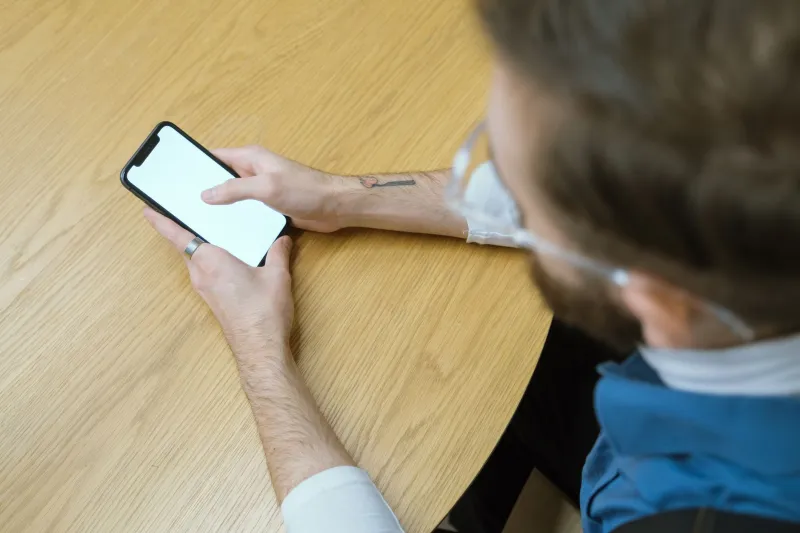
At some point in the last decade, lamenting the death of real conversation became one of the most popular forms of content on the internet. The irony is presumably not lost on anyone, and yet it hasn't slowed production even slightly. There are TED talks about it. There are books about it. There are viral tweets, each generating thousands of replies, all discussing how we no longer know how to talk to each other. There are dinner table photos with everyone's face illuminated by a phone screen, captioned with something mournful about lost connection, shared by people on their phones.
We are extremely online about being too online. And I want to suggest that this is not a coincidence.
The Nostalgia We're Selling Each Other
The standard version of this conversation goes something like this: there was a before time, when families gathered at dinner and actually talked. Eye contact was made. Stories were shared. Grandparents told long, wandering anecdotes. Children asked questions. Everyone was present in a way that the smartphone has now permanently destroyed.
This version of the past is almost entirely fictional.
American family dinners have been the site of awkward silences, unspoken resentments, generational misunderstandings, and performative togetherness for as long as there have been American families. The 1950s dinner table that nostalgia keeps invoking was also a place where nobody talked about feelings, where certain topics were permanently off-limits, where the television in the next room was already pulling attention away from the table. The idea that we once had a rich, phone-free culture of genuine dinner conversation that smartphones then ruined is a myth we've collectively decided to believe because it gives us somewhere to point.
The phone is a convenient villain. It's visible, it's new, and it's easy to photograph for your think piece.
The Discourse as Avoidance
Here's the more uncomfortable possibility: we talk obsessively about disconnection because it's easier than actually connecting.
Engaging with the problem at the level of cultural critique—writing about it, posting about it, forwarding articles about it to people you haven't called in months—allows you to participate in the conversation about connection without doing the hard work of connection itself. It's the same mechanism as the museum gift shop, the literary tote bag, the Spotify playlist you treat as a personality. You acquire the symbol of the thing instead of the thing.
Posting a photo of your family on their phones at dinner with a sad caption is not the same as putting your own phone down and asking your teenager something real. Sharing a viral essay about the death of dinner conversation is not the same as calling your parents. The discourse about disconnection has become a way of feeling like you're addressing the problem while doing absolutely nothing to change your own behavior.
And the platforms know this. Engagement with content about phone addiction keeps you on your phone. Sharing articles about how we don't talk anymore generates comments, reactions, arguments—all the metrics that matter. The critique of digital life has been fully absorbed into digital life, which is either a profound irony or just Tuesday.
What Silence Actually Requires
There's another layer here that the standard narrative skips entirely: sitting with other people in genuine silence, or in conversation that doesn't perform well, is hard. It requires a tolerance for awkwardness that most of us have been actively trained out of.
The dinner table, phones or no phones, asks something difficult of us. It asks us to be present with people we didn't choose—family members who hold complicated histories, who might say something that requires a real response, who might need something from us that we don't know how to give. The phone is not just a distraction from connection. For a lot of people, it's a relief from the specific discomfort of being known by the people who know you best.
Kids on their phones at dinner are not uniquely broken. They're doing what humans have always done when a social situation feels overwhelming or emotionally loaded: they're finding an exit. Previous generations looked out the window, picked at their food, retreated into their own thoughts. The phone is just a more engaging version of staring at the wallpaper.
This doesn't mean the phone isn't a problem. It means the problem isn't the phone.
The Conversation We're Actually Avoiding
If we're going to be honest about why the dinner table feels empty, we probably have to reckon with things that are harder to blame on a device. The acceleration of American work culture, which has made genuine rest at any hour feel vaguely irresponsible. The epidemic of loneliness that predates smartphones by decades. The way American families have been physically dispersed by economic pressure, so that the people you actually want to talk to might be in a different time zone. The cultural permission—or lack thereof—to say something true at the dinner table instead of something safe.
These are harder problems. They don't have a simple solution you can implement by putting a basket by the front door for everyone's phones. They require sustained attention to the actual texture of your relationships, which is slow and unglamorous and produces no content.
Putting Down the Take
The conversation about conversation has become its own kind of noise. And the people profiting from your anxiety about disconnection—the wellness industry, the productivity gurus, the authors of books about reclaiming your attention—have a vested interest in keeping you worried about it rather than actually doing anything about it.
Here's what might actually help, and it's not a hot take: call someone you've been meaning to call. Not to talk about disconnection. Just to talk. Sit at the dinner table without an agenda and see what happens when you don't fill the silence immediately. Let the conversation be boring. Let it go nowhere. Let the people across from you be complicated and surprising and occasionally annoying.
The dinner table was never perfect. It was never the warm, luminous gathering we keep mourning. But it was—it still is—a place where something real might happen, if you can stand to be there without documenting the experience of being there.
Put down the discourse. Pick up the fork. See who shows up.