You're Not Drinking Coffee, You're Defending a Personality
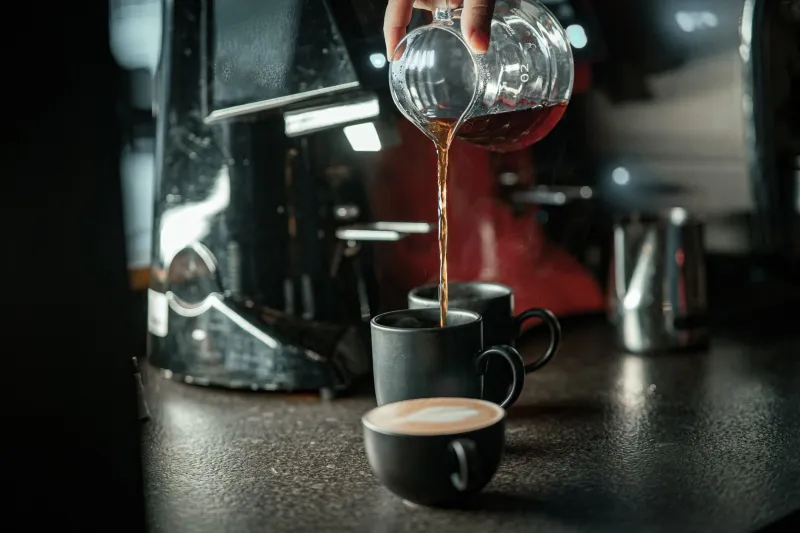
Let me paint you a scene. You're at a party. Someone asks what kind of coffee you drink. You say Dunkin'. And before the word has fully left your mouth, someone across the room with a tote bag and a very specific opinion about grind size has already started composing their response.
This is America in 2024. We have somehow made coffee — coffee, a drink that billions of people consume primarily to avoid falling asleep at their desks — into a referendum on who you are as a person.
Welcome to the taste wars. Population: everyone, whether they signed up or not.
The Third Wave Broke Over All of Us
The so-called third wave of coffee — the movement that gave us single-origin beans, direct-trade sourcing, and menu descriptions that sound like a sommelier having a fever dream — arrived with genuinely good intentions. Specialty roasters wanted to honor the craft. They wanted consumers to appreciate complexity. They wanted to push back against the burnt, bitter commodity coffee that had dominated American cups for decades.
Noble goals. Truly.
But somewhere along the way, the education became the gatekeeping. The vocabulary that was meant to open coffee up — "bright acidity," "terroir," "anaerobic process," "cupping score" — calcified into a shiboleth. If you didn't know the words, you didn't belong at the bar. And if you ordered something with a flavored syrup, God help you.
The irony is thick enough to spoon. A movement that positioned itself as a rejection of corporate coffee culture ended up constructing its own velvet rope, just a fancier one.
Boba Got Complicated Too
Think this is just a coffee thing? Boba tea would like a word.
What started as a beloved Taiwanese street drink — accessible, fun, wildly customizable — has been through the American cultural machine and come out the other side with its own hierarchy. There are now boba shops that position themselves as artisanal and elevated, and there are boba shops that are considered basic. There are rankings, hot takes, TikTok callouts. There are people who will explain to you, at length, why the tapioca pearls at their preferred spot are cooked to a superior chewiness.
The pattern is identical to what happened to coffee, just compressed into a faster timeline. A drink that carries genuine cultural meaning for a specific community gets adopted broadly, then stratified, then turned into a personality accessory. The people who most loudly perform their sophisticated boba opinions are often the furthest from the communities that built the culture in the first place. Make of that what you will.
Cold Brew Is a Vibe and Everybody Knows It
Cold brew deserves its own moment in this conversation because cold brew gatekeeping is its own distinct genre.
It's not complicated to make — you steep coarse grounds in cold water for twelve to twenty-four hours, strain it, done. It's genuinely smoother and less acidic than hot-brewed coffee. It's a legitimate preparation method. And yet the discourse around it has achieved a level of intensity that would seem more appropriate for, say, international diplomacy.
Cold brew drinkers have been accused of pretension. Cold brew haters have been accused of being threatened by progress. Nitro cold brew opened a whole new front in the conflict. Canned cold brew from a gas station fridge has been used as evidence of both cultural decline and democratic accessibility, depending on who you ask.
At some point, the drink stopped being the point.
Class in a Cup
Here's the part that's worth saying plainly: this is a class conversation wearing a beverage costume.
Specialty coffee is expensive. A proper pour-over at a third-wave café in a major American city can run you six, seven, eight dollars. The knowledge required to navigate the menu fluently is cultural capital that accrues to people with specific educational and social backgrounds. When we sneer at someone for drinking a gas station coffee or a fast-food iced coffee, we are not critiquing their palate. We are performing a status distinction.
The people who can't afford the fancy stuff — or who simply don't have the bandwidth to care about extraction ratios after a twelve-hour shift — are not unsophisticated. They're just not playing the game. And the game was never actually about coffee.
This dynamic isn't new. Wine went through it. Craft beer went through it. Whiskey is currently going through it. Every time a consumable gets elevated into a cultural symbol, someone builds a ladder and starts kicking it away from the people below them.
The Bit Where I Admit I Have a Favorite Roast
I'm not going to pretend I don't have opinions about coffee. I do. I have a preferred brewing method. I have a local roaster I'm loyal to. I notice the difference between a mediocre cup and a great one.
But there's a difference between having preferences and weaponizing them. There's a difference between sharing enthusiasm and performing superiority. The first is genuinely one of the small pleasures of being alive in a world full of interesting things to taste and try. The second is just insecurity with better branding.
The specialty beverage world, at its best, is genuinely exciting. There are people doing remarkable, creative, thoughtful work with coffee, tea, and everything adjacent. That deserves celebration.
What doesn't deserve celebration is the reflexive contempt for anyone who isn't keeping up. The eye-roll at the Starbucks order. The condescension toward the diner coffee drinker. The elaborate performances of taste that are really just performances of class.
Drink what you like. Let other people drink what they like. And maybe, just maybe, reserve the tasting notes for the cup — not the person holding it.