Stained and Styled: When What You Drink Becomes the Look You're Going For
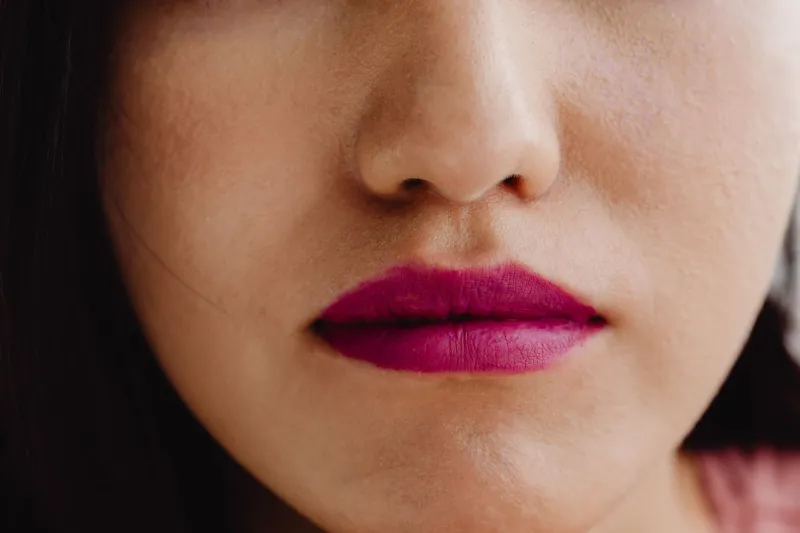
Let me paint you a scene. A woman is at a dinner party in Silver Lake, Los Angeles. She's holding a glass of natural red — something orange-y, slightly funky, poured from a bottle with a label that looks like a kindergarten art project in the best possible way. Her lips are, by the end of the first pour, a deep, uneven burgundy. She hasn't touched her lip liner in hours. She looks, objectively, incredible. Someone takes a photo. It ends up on Instagram. Forty people save it.
The caption doesn't mention the wine. It doesn't have to.
This is where we are now: the beverage as beauty accessory. The drink as the look. And it's weirder, more layered, and more culturally loaded than it might seem at first sip.
The Accidental Aesthetic
For most of human history, a stained mouth was something you fixed, not something you showcased. You blotted. You reapplied. You checked your teeth in the back of your spoon. The idea that a wine-stained lip could be aspirational is genuinely new — and it tracks almost perfectly with the rise of the "undone" aesthetic that's dominated beauty culture for the past decade.
The no-makeup makeup look. The effortless hair that took forty-five minutes. The carefully distressed denim. There's a whole genre of beauty built around performing naturalness, and the beverage stain fits perfectly into that grammar. It says: I was having such a good time that I forgot to perform for you. Isn't that charming? Please observe how unbothered I am.
Beauty brands caught on fast. "Lip stain" as a product category exploded — formulas designed to mimic exactly the uneven, slightly faded, lived-in look of lips that have been busy enjoying themselves. Glossier, Rare Beauty, NYX, and a dozen indie brands all chased the same vibe: color that looks like it came from living, not from a compact.
But here's what's interesting: the product category was named after the accident. We looked at the thing that happened to us and decided to manufacture it on purpose. That's a very particular kind of cultural moment.
What Your Drink Says Before You Say Anything
Beverages have always been class signals. This isn't a hot take — it's history. Tea versus coffee in colonial America. Champagne versus beer at the company party. The specific brand of bottled water you carry into a meeting. What you drink, and how you drink it, communicates volumes about who you are or, more accurately, who you want people to think you are.
But the visual dimension of that signaling has sharpened considerably in the social media era. It's no longer just about taste — it's about the image the drink creates. The matcha latte with the precise foam art in a ceramic cup. The espresso martini that photographs like a dream. The aperol spritz that launched a thousand summer content series. The aesthetic of the beverage has become inseparable from its cultural meaning.
This extends to what it does to your face. A matcha drinker with a faint green tinge to their teeth is signaling something different than someone with coffee-dark lips or the aforementioned wine stain. These aren't neutral observations — they're read as personality data by the people around us and, increasingly, by the algorithms that decide what content to surface.
Ask any lifestyle content creator and they'll tell you: drinks that create visual drama perform better. The color contrast. The texture. The way certain beverages transform the mouth into something painterly and expressive.
The Class Thing (We Have to Talk About It)
Natural wine isn't cheap. Specialty matcha from a Japanese import shop isn't cheap. The craft cocktail that photographs like a Caravaggio painting is, like, eighteen dollars before tip. The beverages that have become the most aesthetically coded — the ones most associated with the lip-stain phenomenon — are almost universally the ones that carry significant price tags and cultural gatekeeping.
There's a reason "wine mom" and "wine girlie" aesthetics look different even when the product is technically the same. The stemless grocery store Pinot Grigio and the skin-contact Slovenian orange poured into a hand-blown glass represent different tribes, different income brackets, different levels of cultural capital — and the visual residue of those drinks on a person's face signals all of that simultaneously.
This isn't to say people are consciously calculating this at the dinner party. Most aren't. But the aestheticization of beverage culture doesn't happen in a vacuum. It happens in a world where everything we consume is also a statement about who we are, and some statements carry more prestige than others.
Reclaiming the Stain
What I find genuinely compelling about the lip stain phenomenon — beyond the branding and the class dynamics and the Instagram mechanics — is what it says about pleasure and permission.
For a long time, visible evidence of enjoyment was considered a flaw to be corrected. Smudged lipstick was a problem. A stained mouth was something to apologize for. The move toward embracing that evidence, toward letting the drink leave its mark without rushing to erase it, feels like a small but real cultural loosening. A willingness to show that you've been somewhere, done something, consumed something joyfully and without total composure.
That's actually kind of radical in a world where beauty culture has historically demanded that women especially look effortlessly perfect at all times — like they never sweat, never smear, never fully surrender to the moment.
The lip stain, at its most honest, is proof of a good time. And whatever the marketing machine has done with that idea — however many product lines and sponsored posts have been built on top of it — the original impulse underneath is worth holding onto.
Drink something that colors your world. Let it show.