Thank You, Now I Owe You Forever: The Debt We Feel When Someone Says Something Nice

Someone tells you that your jacket is incredible. You say thank you. Then you spend the next forty-five minutes wondering if you need to compliment something of theirs in return, whether you already owe them a like from last week, and if your failure to immediately reciprocate makes you the kind of person who takes without giving.
The jacket comment takes four seconds. The internal audit it triggers takes most of your afternoon.
This is where we've landed. A place where kindness has a ledger.
When Nice Things Started Feeling Like Invoices
Human beings have always had a complicated relationship with reciprocity. Anthropologists will tell you that gift exchange is one of the oldest social technologies we have — that giving and receiving creates bonds, establishes trust, and signals belonging. None of that is new.
What's new is the speed and visibility of the exchange. And what that speed and visibility have done to our nervous systems.
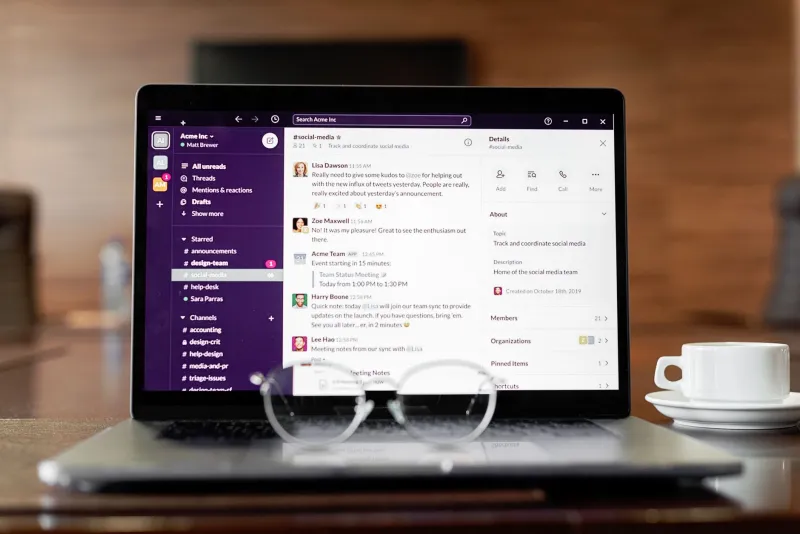
On social media, every compliment is public. When someone comments "this is stunning" on your photo, the comment is there for anyone to read. If you don't respond — or if you respond without equal warmth — that's visible too. The exchange isn't private. It's a performance witnessed by anyone who happens to scroll past, and the social math of it has to be done in real time, under observation.
This is a genuinely new condition. Your grandmother complimenting your haircut at the dinner table was not a transaction that could be screenshotted and used against you. The compliment your coworker leaves on your LinkedIn post absolutely can be.
The Engagement Economy Broke Something
Social platforms didn't invent social anxiety, but they did build a very specific infrastructure for it. The whole architecture of likes, comments, follows, and shares is built on a model of quantified reciprocity. You give attention; you receive attention. The numbers track it. The algorithm rewards it.
Spend enough time in that environment and the logic starts to bleed into your offline life. You start doing the math in real-world interactions that were never supposed to have math in them. Did I like her last three posts and she only liked one of mine? Does that mean something? He commented on my work but I haven't said anything about his recent project — does he think I didn't notice? Does he think I don't care?
None of these questions are crazy. They're the entirely rational output of a brain that has been trained, through thousands of micro-interactions, to treat attention as a currency with exchange rates and overdraft penalties.
The problem is that real human connection doesn't work that way. Real kindness isn't supposed to balance to zero. But we've imported the logic of the engagement economy into our actual relationships, and now we can't always tell the difference between a genuine moment and a transaction.
The Compliment as Opening Move
There's a particular flavor of this anxiety that lives in professional and creative spaces. Someone praises your work — your writing, your design, your presentation — and instead of just receiving it, your brain immediately starts running threat assessments.
What do they want? Is this flattery in advance of a favor request? Is this the setup for a critique? Are they establishing social credit they plan to spend later? Or — and this is the darkest version — are they genuinely being kind, and now you owe them the same quality of attention in return, and what if you can't deliver?
This is what happens when you live long enough in environments where compliments are routinely used instrumentally. Where praise is the opening of a negotiation rather than just... a thing someone felt and said. You start to pre-load suspicion into moments that don't deserve it. You armor up against niceness because niceness has, too many times, come with a bill attached.
The result is a kind of preemptive exhaustion. You brace for the ask. You prepare your deflection. You manage your warmth so you don't accidentally write a check you can't cash.
The Receiving Problem
Here's something that doesn't get talked about enough: most of us are genuinely terrible at receiving compliments. Not because we're ungrateful — but because we've never been taught how to do it without immediately converting the compliment into a liability.
The standard American response to being told something nice is to immediately minimize it. "Oh, this old thing." "It was nothing, really." "I don't know, I feel like it could've been better." We deflect so reflexively that we don't even notice we're doing it. We've been taught that accepting a compliment at face value is somehow arrogant, so we've developed this elaborate ritual of self-deprecation that's supposed to read as humble but really just makes the compliment-giver feel like their kindness bounced.
Social media added a new layer: the performance of receiving. Now we have to accept compliments publicly and gracefully and without seeming like we expected them or are too pleased about them. We have to hit a very specific register of "touched but not needy." Too little response and you seem cold. Too much and you seem desperate. The window of acceptable gratitude is approximately the width of a comment box.
Letting the Gift Be a Gift
Somewhere in the last decade, genuine compliments became a rare enough commodity that receiving one without suspicion almost feels naive. And that's a real loss. Not a dramatic one — nobody's writing elegies about it — but a quiet, accumulating kind of loss. The kind that makes human contact feel subtly more expensive than it used to.
The reciprocity trap isn't really about social media, in the end. Social media accelerated it and made it measurable, but the underlying fear — the fear that being seen creates an obligation you might not be able to fulfill — is older and more human than any algorithm.
What might actually help is something embarrassingly simple: letting the compliment land. Not immediately converting it into a debt. Not scanning for the angle. Not pre-building the return offer. Just — for a moment — letting someone think something good about you and accepting that as a complete transaction in itself.
You don't owe anyone a matching compliment for noticing you. You don't owe anyone a follow for a kind comment. You are allowed to be seen without immediately figuring out how to pay for it.
Kindness isn't an invoice. It's not supposed to come with net-30 terms.
Sometimes someone just thinks your jacket is incredible. And that's the whole story.