Smile Included, Soul Not: The Performed Warmth We're Paying Extra For
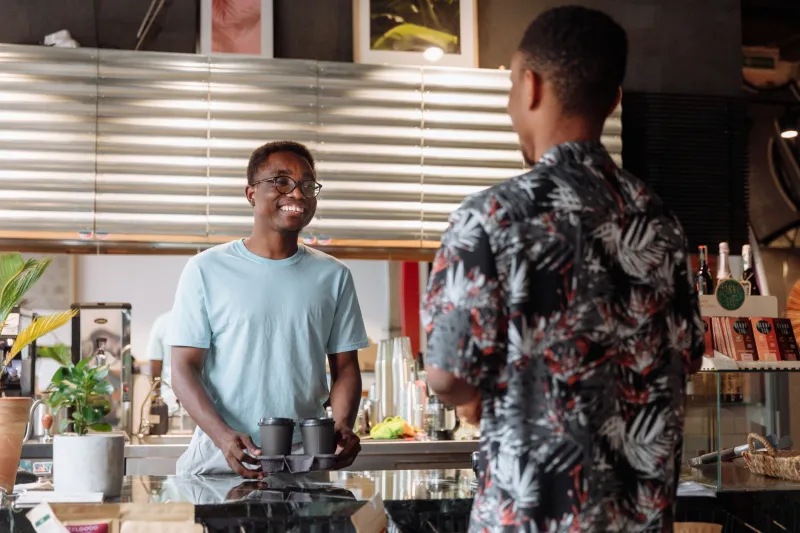
Let's be honest about something a little embarrassing. You walk into your usual coffee spot, the barista looks up, maybe says your name, maybe asks if you want "the usual" — and something in your chest loosens. Something that felt tight all morning suddenly doesn't. You feel, for just a moment, known.
And then you tip 20%, take your drink, and go sit alone.
There's nothing wrong with you for feeling that. But there is something worth examining about why a scripted exchange with a person who is literally paid to be nice to you can scratch an itch that actual relationships sometimes can't. We're not just buying coffee anymore. We're buying the sensation of mattering to someone — and the service industry figured that out a long time ago.
The Job Description Includes You
Here's the thing nobody really wants to say out loud: your barista's warmth is, at least partially, a deliverable. That's not a cynical read — it's just the reality of how the hospitality industry operates. Remembering your name, asking about your weekend, commenting on your new jacket — these are techniques. They're taught in training sessions. They show up in customer satisfaction rubrics. The goal is retention, not relationship.
This isn't a criticism of the workers themselves, who are often genuinely warm people doing an exhausting job for wages that don't reflect the emotional labor involved. The critique lands somewhere higher up — at the system that figured out that simulated intimacy is a revenue strategy. When a chain coffee brand trains its staff to use your name three times per interaction, that's not community-building. That's a conversion funnel with a human face.
The power dynamic here is strange and worth sitting with. The barista has to be warm. You get to decide whether to interpret that warmth as real. And most of us, quietly, choose to interpret it as real — because the alternative is lonelier.
Loneliness Has a Business Model
America has a loneliness problem that predates the pandemic and has only deepened since. Surgeon General advisories, think-piece avalanches, the whole cultural conversation — we know this. What gets talked about less is how effectively that loneliness has been monetized.
Think about the infrastructure that has grown up around our social isolation. Apps that simulate companionship. Subscription boxes that feel like a friend picked something out for you. Influencers who talk directly into the camera like they're confiding in you specifically. And yes, the coffee shop that knows your order — that's part of the same ecosystem. We have built an entire economy around the feeling of connection without the inconvenience of actual mutual vulnerability.
Transactional relationships are, by design, safe. The barista won't judge you for your life choices. They won't cancel plans. They won't need anything from you emotionally. You can have the warm part of human contact without any of the risk. And if you're already stretched thin — by work, by family, by the general grinding weight of existing in 2024 — that frictionless warmth starts to feel like enough. Sometimes it feels like more than enough. Sometimes it feels like the best part of your day.
That's where it gets a little sad.
What We're Actually Asking For
When you feel a small lift from being recognized at the counter, you're not delusional. You're responding to something real — eye contact, your name spoken aloud, the signal that your presence registered. These are genuine human needs. The problem isn't that you have them. The problem is that we've built a society where those needs increasingly go unmet by the people we're actually close to, so we end up outsourcing them to strangers whose job it is to simulate meeting them.
There's a term in psychology — parasocial relationship — typically used to describe the one-sided bond people form with celebrities or media personalities. But the coffee shop version is its own quiet category. You know their name (it's on their badge, or you asked once). They know yours (you gave it for the cup, or they remembered). You have a script you run through a few times a week. It feels like a relationship. It has the texture of one. But if you didn't show up tomorrow, they would not wonder where you went.
That asymmetry is the whole thing. And most of us sense it, somewhere under the comfortable routine of it, but we don't push on it because pushing on it would mean acknowledging how much of our social life runs on this kind of hollow fuel.
The Workers Carry This Too
It's worth naming what this costs the people on the other side of the counter. Emotional labor — performing warmth, managing your own feelings while absorbing other people's moods, staying cheerful through the 200th interaction of a shift — is genuinely depleting. Service workers aren't just slinging drinks. They're functioning as the social infrastructure for a lonely country, and they're largely uncompensated for that specific part of the work.
Some of them do form real connections with regulars. That happens. But many are also quietly managing the discomfort of customers who have started to treat them like a friend without offering anything a friendship actually requires — like, say, asking how they're doing and waiting for an honest answer. The performance of intimacy flows one direction, and the workers maintain it whether they feel it or not.
That's a weird thing to ask of someone making $15 an hour.
What You Could Do Instead
None of this is an argument to stop going to your coffee shop or to perform some kind of detached irony every time a barista smiles at you. The warmth is real even when it's also professional. Take it. Enjoy it. Tip well.
But maybe let it be a signal rather than a substitute. If the best social interaction you had this week was at a register, that's worth noticing — not with shame, but with curiosity. What would it take to have one conversation this week where someone could actually say no to you? Where you could be actually difficult, actually complicated, actually present?
The coffee shop will keep the light on. It literally has to. But the connection you're really hungry for doesn't come with a loyalty rewards card.
We deserve the real thing. Even when the real thing is harder. Especially then.