First Name Basis, Zero Depth: The Emotional Illusion of Coffee Shop Belonging
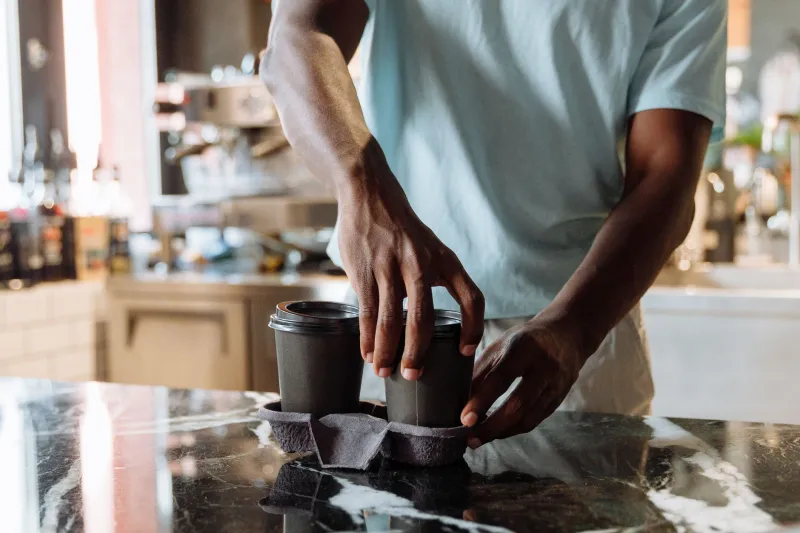
There's a specific feeling you get when you walk into your regular coffee spot and the person behind the counter starts making your drink before you've even opened your mouth. It's warm. It's validating. For a half-second, it feels like being known.
Except you're not. Not really. And somewhere underneath the espresso steam and the lo-fi playlist, you probably already know that.
The Architecture of Performed Familiarity
Coffee shops — especially the indie ones with the exposed brick and the chalkboard menus written in that specific hand-lettered font — are masterclasses in curated intimacy. They're designed, consciously or not, to replicate the texture of community without the inconvenience of actual commitment. You get the greeting. You get the remembered order. You might even get a question about how your move went, because you mentioned it once three Tuesdays ago and your barista has a genuinely impressive memory.
What you don't get is someone who will pick up when you call at 11 PM. You don't get the person who remembers your move and checks in six months later to ask if you ever found a good grocery store nearby. That's not a failure on anyone's part — it's just the terms of the arrangement, even if no one ever said them out loud.
Baristas are trained, formally or informally, to make you feel seen. It's good for business. A customer who feels recognized comes back. They tip better. They write the five-star Yelp review that mentions the staff by name. The warmth is real in the moment — it would be cynical and wrong to call it fake — but it operates within a very specific container. And we have collectively decided to pretend that container is bigger than it is.
Why We're So Desperate for This
Here's the uncomfortable part: we don't keep falling for this illusion because we're naive. We fall for it because the alternative — actual, sustained, reciprocal community — has become genuinely hard to find in American life.
Robert Putnam wrote Bowling Alone back in 2000 and spent 500 pages documenting the collapse of civic connection in the United States. That was before smartphones. Before the gig economy restructured how people spend their time. Before the pandemic rewired everyone's baseline tolerance for other humans. We are, by almost every measurable metric, more isolated than our parents were. The third spaces that used to anchor neighborhoods — the diner, the church hall, the union meeting, the front porch — have been replaced by places you have to spend money to occupy.
So of course we're going to extract whatever emotional nutrition we can from the coffee shop. Of course we're going to let the barista who remembers we take no sugar stand in, just a little, for the neighbor who used to wave from across the street. We're not stupid. We're starving.
Recognition Is Not the Same as Care
There's a psychological concept called parasocial relationships — the one-sided bonds people form with celebrities, podcast hosts, fictional characters. The relationship feels mutual but structurally isn't. Coffee shop familiarity operates on a smaller, more mundane version of the same dynamic.
Your regular barista has probably served somewhere between fifty and two hundred people today. They've deployed their warmth — and again, that warmth is real — across all of those interactions. They don't go home carrying the weight of your rough week the way a friend would. They can't. That's not the job, and it shouldn't be. But we absorb the warmth and quietly file it under people who care about me, which is a categorization error with real consequences.
When that barista leaves for a different job, or the shop closes, or you move neighborhoods, the grief can feel disproportionate. That's not weakness. That's just what happens when you've been leaning on something that was never load-bearing.
The Shop Isn't the Problem. The Scarcity Is.
None of this is an argument against coffee shops. Cup Zine is not here to tell you to stop going to your local spot or to maintain clinical emotional distance from the person who makes your cortado. That would be absurd, and also deeply sad.
The point is to look clearly at what's happening when you walk in, feel that little pulse of recognition, and let your shoulders drop. You're not experiencing community. You're experiencing a very good simulation of it, built by people who are often underpaid and emotionally taxed by the labor of performing connection for eight hours straight.
The simulation isn't worthless. Moments of warmth, even transactional ones, do something real to the nervous system. But if the coffee shop is the primary place in your week where you feel recognized, that's information. Not a judgment — information. About what American social infrastructure has failed to provide. About how thoroughly loneliness has been normalized. About how low the bar has dropped for what counts as belonging.
What We Could Actually Do With This
The most honest thing the coffee shop can be is a starting point. A place where you feel human enough to go be human somewhere else — in a book club, a community garden, a mutual aid group, a standing Sunday dinner with people who actually know what year your parents divorced and why you don't talk to your college roommate anymore.
Your barista is not your therapist, your best friend, or your neighbor in any meaningful sense. They are, at best, a warm reminder that connection is something you crave and deserve. Use that reminder. Then go find the real thing.
The cup is a good place to start. It was never meant to be the whole story.