Nothing on the Walls, Everything to Prove: The Quiet Arrogance of Beige Aesthetics
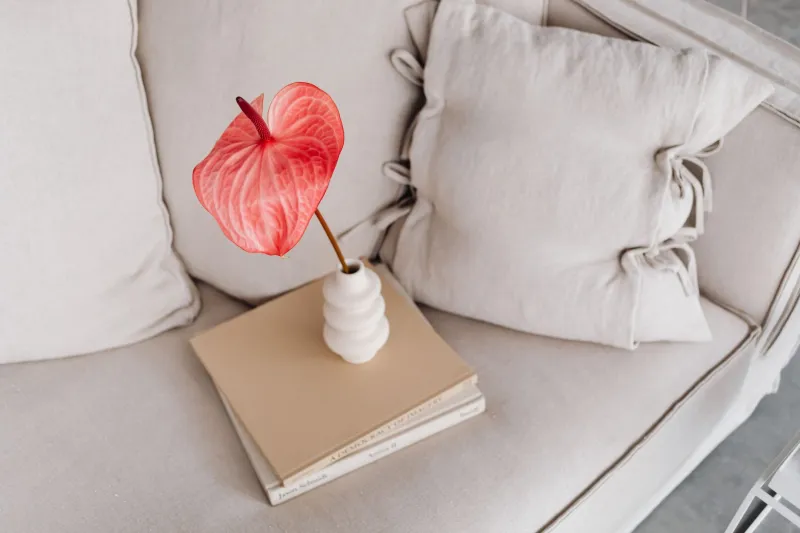
Walk into the right apartment in any mid-sized American city right now and you'll find the same room. Warm white walls. A jute rug. One plant — something structural, probably a monstera or a fiddle-leaf fig that has survived against all odds. A linen couch in a color that doesn't have a name, just a vibe. Maybe a single piece of art: abstract, muted, probably purchased from a small independent shop whose Instagram bio says something about "slow living."
Everything in this room is technically tasteful. Everything in this room cost more than it looks like it did. And everything in this room is saying something very loud while pretending to whisper.
The Beige Revolution and Its Discontents
The ascent of neutral minimalism as a dominant aesthetic in American interior design, fashion, and lifestyle content didn't happen by accident. It rode in on the back of a particular cultural anxiety — the fear of being too much. Too loud. Too cluttered. Too obvious in your wanting.
Maximalism, with its patterns and its color and its visible enthusiasm, had become coded as tacky. As trying. As the aesthetic of people who hadn't yet learned to want correctly. And so the corrective arrived: strip it all back. Pare down. Choose less. Be the room that doesn't need to explain itself.
Except it does explain itself. Constantly. That's the whole point.
The beige aesthetic isn't the absence of a statement. It's a very specific statement, delivered through the language of restraint. It says: I have enough security — financial and psychological — to not need color. I have transcended the chaos of wanting things. I have arrived somewhere calmer than you.
This is not enlightenment. This is a new flavor of showing off.
Class Costume, Tastefully Distressed
Let's be honest about what neutral minimalism actually costs. The linen couch is $2,400 from a brand that uses words like "heirloom" and "considered." The ceramic bowl — the one that sits alone on the kitchen counter doing nothing but existing — was $85 from a ceramicist whose waitlist is six months long. The jute rug sheds constantly and you know it sheds constantly but you keep it because it looks right in a way that the $49 alternative from Target simply does not.
This is consumption. It's just consumption wearing a philosophy as a coat.
The irony is that the stripped-down aesthetic often requires more deliberate spending than its cluttered counterpart. When every object in a space is visible and isolated, each one carries enormous representational weight. A maximalist room can absorb a bad purchase. A minimalist room cannot. Every item is on display. Every item is a decision. Every item is a signal.
This creates a kind of aesthetic perfectionism that is, if we're being generous, exhausting, and if we're being honest, a pretty effective mechanism for class signaling dressed up as personal growth.
Emotional Flatness as a Design Choice
There's something else happening in the beige room, though — something beyond the economics. The stripping away of color and pattern and visual noise isn't only about status. It's also about affect. Or rather, the management of it.
Neutral spaces don't demand anything from you emotionally. They don't confront you with someone else's personality. They don't make you feel things you weren't planning to feel. They are, in a very literal sense, designed to be inoffensive — which is another way of saying they are designed to be safe.
And that's worth sitting with. Because there's a version of minimalism that is genuinely about reducing overwhelm, about creating a physical environment that doesn't compete with your inner life. That's real and it's valid. But there's another version that's about emotional avoidance — about creating a home so neutralized that it can't reflect anything back at you. No mess. No history. No evidence of a self that wanted things and changed its mind.
The Instagram-optimized minimalist apartment isn't a home in the traditional sense. It's a set. Designed to be photographed, shared, and admired by people who will never sit in it. The living part is almost incidental.
"Less Is More" Was a Slogan, Not a Truth
Mies van der Rohe said "less is more" in the context of architectural modernism. He meant it as a formal principle about structure and function. He did not mean it as a directive to purchase a $300 candle that smells like "forest air" and place it on a floating shelf next to nothing.
Somewhere in the translation from design philosophy to lifestyle content, the idea got hollowed out and refilled with something shinier. "Less is more" became a brand. It became a content category. It became a way to sell you things by convincing you that buying the right fewer things was morally superior to buying many wrong ones.
This is still buying things. The consumption is still happening. It's just been reframed as curation, which is a more flattering word for the same behavior.
What the Clutter Was Actually Saying
Here's the thing about maximalism, about the rooms full of stuff and color and overlapping patterns and the kind of visible accumulation that gets called "messy" in polite company: it's honest. It shows evidence of a life being lived. It shows that someone was here, wanted things, kept things, changed, and didn't erase themselves in the process.
The grandmother's house with the ceramic figurines and the floral wallpaper and the stack of Reader's Digests from 1987 is not a failure of taste. It's a record. It's a person.
The beige room, for all its visual calm, often tells you very little about who lives there. Which might be the most revealing thing about it. Not the objects on display, but the conspicuous absence of anything that could be used against you.
Maybe the real question isn't "what does your aesthetic say about you?"
Maybe it's: why are you so afraid of it saying anything at all?