Infinite Queue, Zero Finish Line: How Streaming Broke Your Brain's Sense of Done

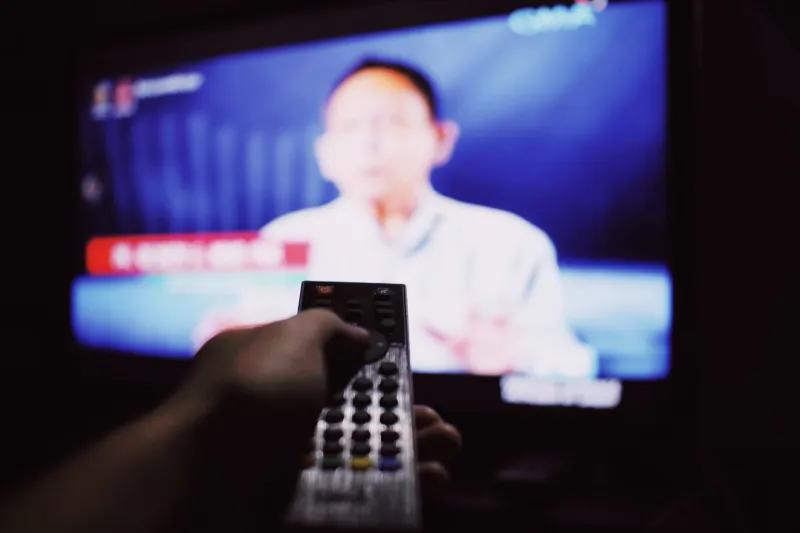
There's a specific kind of exhaustion that hits somewhere around episode four of a show you were genuinely excited about two weeks ago. You're not bored exactly. You're not done. You're just... somewhere in the middle, and suddenly your home screen is surfacing a documentary about competitive orchid growers and a limited series your coworker mentioned once in the break room, and somehow those things feel more urgent than the show you were actually watching.
You didn't decide to abandon it. The algorithm nudged you away from it. And you followed.
This is not a coincidence. It is, in the most clinical sense of the phrase, the point.
The Recommendation Engine Doesn't Want You Satisfied
Here's the uncomfortable architecture underneath your streaming experience: completion is bad for business. A finished show is a closed loop. You watched it, you felt something, you moved on — possibly to a book, a walk, a conversation, sleep. A nearly finished show keeps you tethered. An abandoned show that you feel vaguely guilty about keeps you subscribed.
Streaming platforms measure engagement not in satisfaction but in time spent on platform. Their internal metrics care about session length, not narrative resolution. So the recommendation algorithm — which learns your habits faster than most people learn their own — is specifically optimized to interrupt momentum. It watches you slow down on episode five, notices you opened the app and browsed for eleven minutes before pressing play, and quietly files that data away. Then it starts whispering: something newer is right there.
Netflix, Hulu, Max, all of them do this with varying degrees of aggression. The autoplay feature alone — that ten-second countdown before the next episode launches — was specifically designed to eliminate the natural pause where a human being might think, actually, I'm good for tonight. Remove the pause, remove the decision. Keep the session alive.
But autoplaying the next episode of your current show is almost generous compared to what happens when the algorithm decides you need a detour entirely.
The Perpetual Scroll as Psychological Trap
Scroll culture and streaming culture have merged into something genuinely new and kind of sinister. The home screen of any major streaming platform now functions less like a library and more like a slot machine lobby — designed to stimulate, to suggest, to create a low-grade anxiety that whatever you're watching might be the wrong choice when the right choice is just one more scroll away.
Psychologists have a name for this: the paradox of choice. Barry Schwartz wrote about it back in 2004, and the streaming era has turned his thesis into a live experiment conducted on hundreds of millions of people simultaneously. When options are infinite, satisfaction becomes structurally difficult. You chose this show, but you're always half-aware of the thousand shows you didn't choose, and that ambient awareness chips away at your ability to commit.
The platforms know this. They've read the same research. And rather than simplifying the experience to reduce that anxiety — which would be the humane design choice — they've leaned into the overwhelm because overwhelm keeps you scrolling, and scrolling keeps you present, and presence is what they sell to investors.
The result is a viewing culture built on permanent incompletion. Americans are abandoning shows mid-season at rates that would have been unthinkable in the network TV era, not because the content is worse but because the infrastructure actively rewards starting over finishing.
What We Lose When Stories Don't End
This isn't just about attention spans, though yes, those are taking a hit. It's about something quieter and more fundamental: our relationship to narrative closure.
Human beings are story-processing creatures. We evolved to follow arcs — beginning, complication, resolution. There's actual neurological satisfaction in the ending of a well-told story, something that functions almost like a nutritional reward. When you finish a novel, a film, a series that earned it, your brain does a little filing: that happened, it meant something, I can carry it with me.
When you don't finish? The story just... floats. Unresolved characters. Dropped threads. Emotional investments that never paid out. Multiply that by the twelve shows you've got sitting at episode three across various platforms and you've got a kind of cognitive clutter that's hard to name but easy to feel — a vague dissatisfaction, a sense that you're always consuming and never quite nourished.
And here's the cruelest part: the algorithm is learning from your abandonment. Every show you ditch halfway teaches it that you're a person who drifts, who can be redirected, who responds to novelty. So it serves you more novelty. And the cycle compounds.
Reclaiming the Finish
There's something almost radical about deciding to finish what you started in the streaming era. Not in a productivity-guru, hustle-brain way — but in a quiet, personal-sovereignty kind of way. Choosing to stay with a story through its slow middle, its awkward pivot episodes, its imperfect finale, is an act of resistance against a system that profits from your distraction.
Some people are going analog about it — physical media, DVDs, Blu-rays, the deliberate friction of having to get up and put a disc in. Others are setting platform timers, hiding the home screen, using browser extensions that kill autoplay. These feel like workarounds, and they are, but they're also signals: I want to watch on my terms, not yours.
The deeper fix has to come from somewhere else, though. We need to start asking what kind of relationship we actually want with storytelling. Because the streaming services aren't going to ask that question on our behalf. They're too busy calculating exactly how many seconds of an orchid documentary it takes to pull you away from the show you actually cared about.
Your queue is not a to-do list. It's not a personality. It's not a measure of cultural participation. It's just a list of things you might watch — and most of them, if the platforms get their way, you never will.
Maybe the most countercultural thing you can do tonight is watch the last three episodes of the thing you started in February and actually let it end.