Gone Dark: The Loaded Language of Logging Off

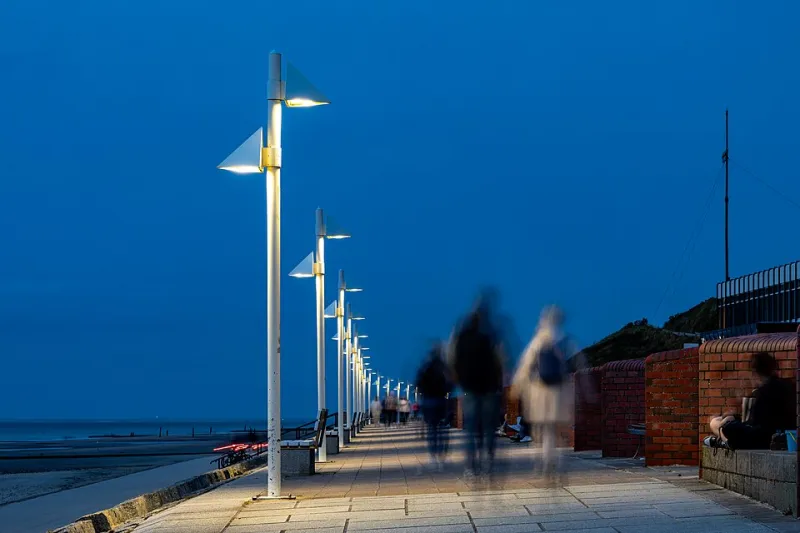
Photo: Photograph by Mike Peel (www.mikepeel.net)., CC BY-SA 4.0, via Wikimedia Commons
Somewhere between your third unanswered DM and the moment you noticed their active status had vanished, you started doing math. Were they mad? Burned out? On a flight? Had something happened? You refreshed. You checked the last seen timestamp like it was a clue in a cold case. And then, because we all live here now, you assumed the silence meant something.
It does. It just doesn't always mean what you think.
Disappearing Isn't Neutral Anymore
There was a time when not being online meant you were simply somewhere else — outside, asleep, living a life that had nothing to do with a screen. That time is over. In a culture where connectivity is the default, absence has become a deliberate act. When someone goes dark, the void they leave behind is loud.
We've developed a whole vocabulary around digital withdrawal. "Taking a break." "Stepping back." "Logging off for a while." These phrases are deployed with the same careful intention as any other public statement. They're announcements. Sometimes they're warnings. Occasionally they're punishments dressed up as self-care.
And we, the people left behind, have gotten frighteningly good at parsing them.
The Burnout Signal We Refuse to Name
Let's be honest about what's usually happening when someone quietly vanishes from their feeds. It's not a vacation. It's not a digital detox in the wellness-influencer sense, with a linen-clad photo of a sunrise and a caption about reconnecting with the earth. It's exhaustion. It's the specific, grinding fatigue that comes from performing availability for so long that you've forgotten what it felt like to exist without an audience.
Burnout doesn't announce itself with a press release. It leaks. It shows up as read receipts that never turn into replies. It looks like a story posted at 2 a.m. and then deleted by morning. It feels like someone who used to post every day going completely, suddenly still.
And here's the part nobody talks about: the people who notice are usually the ones who are also exhausted. We're all running the same surveillance on each other, tracking digital pulse rates, checking for signs of life, trying to figure out if the silence is personal. The entire ecosystem runs on the assumption that presence equals care and absence equals something wrong.
Strategic Invisibility as a Boundary — and a Weapon
Not all going-dark is the same, though. There's the person who deactivates because they genuinely cannot take one more notification. There's the person who switches to invisible on every platform specifically so certain people will wonder. There's the public figure who "takes a step back from social media" right before their PR team releases a statement. And there's the friend who stops responding during conflict, deploying silence as a kind of punishment that's deniable because hey, they just needed space.
Boundaries and control tactics can look identical from the outside. That's part of what makes digital absence so complicated to decode. When someone goes quiet, you're forced to fill in the story yourself. And the story you fill in says as much about you as it does about them.
We've turned logging off into a legible act without ever agreeing on what it means. Which means everyone's reading different translations of the same silence.
The Labor of Always Being Findable
What gets lost in conversations about screen time and digital wellness is how much work it actually takes to be reachable. Not just physically present, but emotionally available, appropriately responsive, performing the right amount of engagement without coming across as either desperate or cold. That's a job. It doesn't pay. Nobody asks you to take it on. You just sort of absorb it, because that's what it means to be a person with a phone in 2025.
The expectation of availability has crept so far into daily life that checking in — on friends, on strangers, on celebrities you've never met — feels like a moral act. And opting out of that feels like a violation. When someone disappears, the people around them often experience it as abandonment before they experience it as autonomy.
That's not an accident. Platforms are built to make absence feel like loss. Every algorithm is engineered to make you feel the gap when someone stops feeding it content. We've been trained to interpret quiet as a problem to be solved.
What We Owe Each Other in the Silence
There's a version of this conversation that ends with a hot take about how we should all just log off more and stop caring what it looks like. That's not where this is going.
Because the truth is that people disappearing without a word does sometimes hurt the people who care about them. The person who goes dark during a mental health crisis isn't just setting a boundary — they might also be unreachable in a way that's genuinely scary for the people who love them. The coworker who stops responding to Slack might be burning out, or they might be leaving everyone else to pick up the slack in a way that's unsustainable.
Digital silence isn't inherently noble or inherently cruel. It's communication — messy, ambiguous, and loaded with everything we haven't figured out how to say directly.
Maybe the more honest question isn't what someone's absence means. It's why we've built a world where absence has become the only way some people know how to say I need out.
The mute button was supposed to give us quiet. Instead, it gave us a whole new language to learn — and nobody handed out a dictionary.